
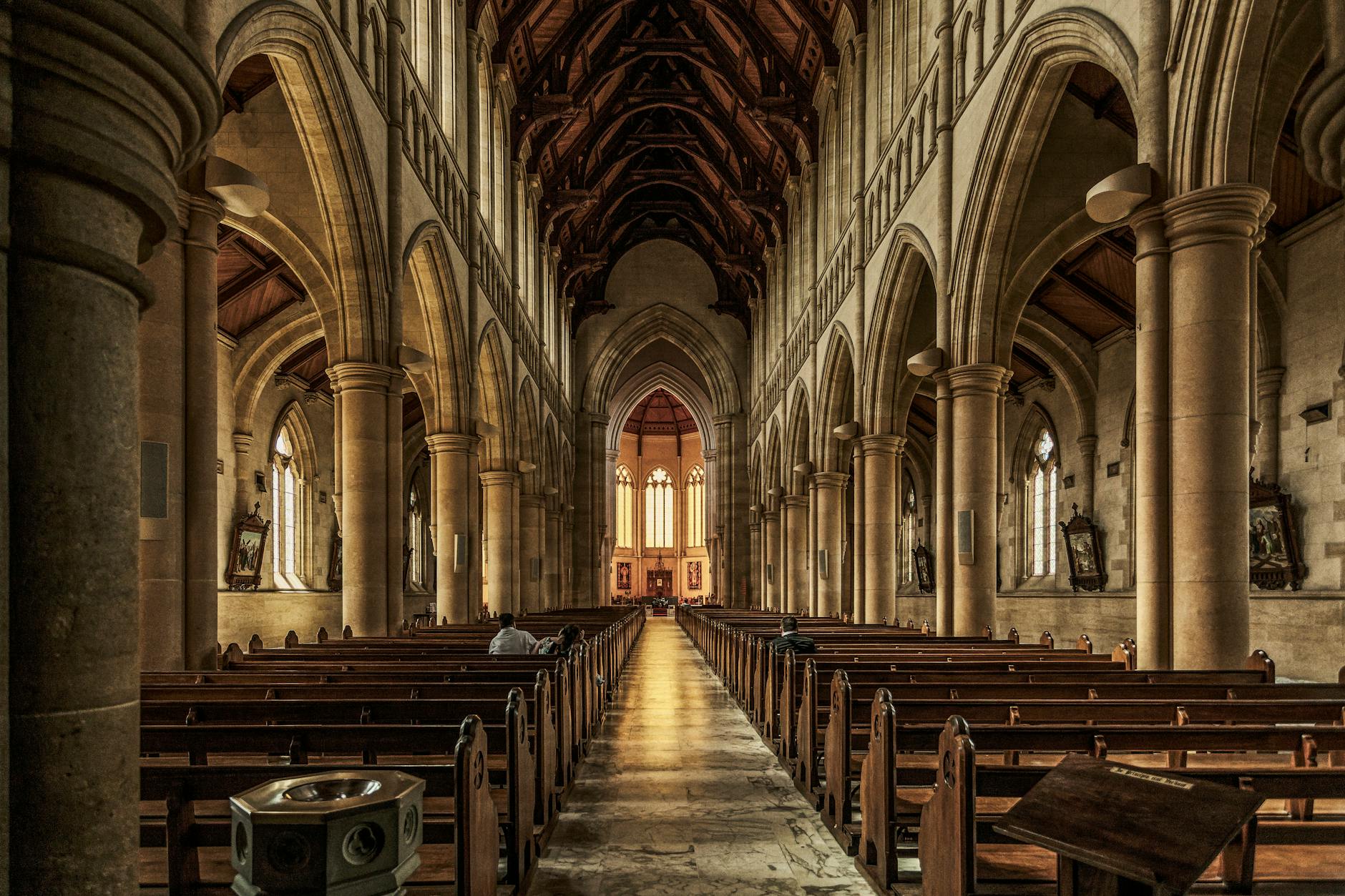
We keep hearing about how church attendance is plummeting, leaving everyone wondering what is going to happen to the institutional church.
Many people blame the pandemic and lack of faith. There is critique of the younger generations – how they are lazy or have no need for organized religion.
What if there was more to it than that, though? This is certainly not the first time the church has gotten it wrong and been her own worst enemy. Yes, it’s true that Gen Zers have less need for a faith community and can be hypercritical of doctrines, but is that really a bad thing? And is this really the reason for a mass exodus from our institutional church?
The problem, it seems to me, is a lack of knowledge of who is sitting in the pews week after week. For decades, I have attended mass and other church services listening to messages that were out of touch and ignorant to the situations of the congregation. Do pastors know who is financially struggling in their parish? Probably not, because most people having financial troubles are not likely to advertise them to everyone. They feel shame and embarrassment and on top of those negative feelings, hear sermons and lectures about how they should be giving more of their money and time. Imaging how this sounds to the single mom working 2 or 3 jobs to support her family. Does the pastor know her? Reach out to her? Sadly, for people who like to say we follow Christ, the answer is often times, no.
What about the LGBTQ+ members of the church? Does the pastor know them by name? Do they go out of their way to make them feel welcomed, included and affirmed in the faith? What about people with disabilities and mental illness? Is the church reaching out to help those of us who suffer with chronic illnesses? Again, sadly, often times, no.
Of course, there are exceptions to this pattern and I would be remiss in not mentioning that some wonderful people are doing extraordinary things in their faith communities, but in my experience, I have sat in church on several occasions feeling unseen, unheard and sometimes even totally dismissed. For these reasons, I have left the church. I have heard tone deaf sermons and homilies filled with ridicule and guilt trips coming from the pulpit. I have seen pockets being stuffed with money and very little of it goes to programs that benefit marginalized communities in the church. It seems it’s “Not what your church can do for you, but what you can do for your church.” And while it’s important that we give back and participate in our faith communities, the marginalized are certainly not responsible for making the institutional church “survive.” Only when we see that shift, where there is a clear understanding that sitting in the front pews, are the marginalized, the outcasts, the poor, the abused – then, I believe, we may see a shift in attendance and the revival of church community.
This model we have now hasn’t been working for some time if we are honest. We show up to mass or service to be spoken at from the altar, as if we are there to learn a lesson, to pass a cosmic exam. We are spoken to like we are not the heartbroken and the desolate. As if WE are not the poor.
Many years ago, I belonged to a faith community that didn’t show any compassion for my disability or health issues. I was just one of many in the crowd. I saw other people neglected – the lonely, the doubting, the angry. People who wanted to forgive but didn’t know how or what forgiveness really meant. Nobody took the time to explore those feelings with them. It was just preached from the pulpit that forgiveness is what we do, and we should just get about doing it. It was also used as a way for church leadership to manipulate their way out of accountability. “Just forgive and forget,” they would say. Helpful? Not so much.
And then there are the narcissistic pastors, who at their worst, abuse and neglect the community and at their best, use their platform to grift from the church and draw attention to themselves, their cause, and their agendas.
My question to the intuitional church is: Does this sound life-giving? Is this the church Jesus envisions? No, I think we are called to vibrant and diverse communities that get to know each other, help each other. Rejoice with those who rejoice, mourn with those who mourn. – Romans 12:15
The church will not survive shifting blame onto the people it is supposed to be shepherding.
So, I ask this…
Do you, Church, want to know us? Do we want to know each other? Accept each other? If so, I think there is reason to hope in the institutional church.

 Stephen Fratello