
Why Is Deconstruction A Dirty Word?

Photo by Pixabay on Pexels.com

I’m sure that you’ve heard the new “diry word” going around in today’s faith communities. The D-word. Deconstruction. Yes, the sound of it ruffles feathers and makes eyes roll – understandably so. There are a lot of negative connotations associated with the deconstructing process.

The first thing that surprised me about deconstructing was that so many people thought this was a new and dangerous undertaking that one decides to go through, rather than something we all inevitably wind up doing at some point in our adult lives if we are honest.

I went through 8 years of Catholic grade school. Years later, after high school, I had moments where I questioned all I learned in church and in Catholic school. I questioned God and doctrines and my own faith. I wondered if God was personal, loving and able to help me overcome things like depression, anxiety, substance abuse and chronic unemployment. If God was really powerful and loved me, then why would He let me go through this? And was God a He? Could I be gay and Christian? I explored these questions and more, in and out of community. I found a spiritual director. Actually, I found many. I got myself into therapy. I read books from the mystics, saints and philosophers. I joined safe spaces that let me explore my faith in all its complexities and I found out that others were doing exactly the same thing. I was not alone.

So, that’s why it came as a surprise to me that some people see deconstructing as this controversial thing. We’ve all been doing it in some form or another throughout our lives. We humans are prone to doubt, fear and uncertainty. We’ve all experienced deep loss and trauma and we seek answers. We may wonder if our faith is enough to sustain us through the dark times.

For some, they can run the risk of throwing out the baby with the bathwater. Faith becomes something that must be explained by science and have neat and tidy answers, otherwise, it’s not worth believing in. For these people, surety and certitude become the goals. Everything has to make sense and fit into the right box. This, I believe, is where deconstruction takes a turn for the worst. The truth is, we will never have all the answers this side of life. Not everything will make sense and life will often confuse us and bring us to our knees in grief. God will remain somewhat elusive, and we can let that evoke a sense of awe and wonder in us or we can fight against it and demand answers. Admittedly, the latter is going to seem more attractive most of the time.

I should mention that many of us have been abused. Spiritual abuse is a real thing and can drain a person’s soul. We need time to heal and find our way, but we also have to remember that the people who abused us do not represent God’s love and so we shouldn’t blame God for what broken people did to us.

Deconstruction is not a dirty word. It means we are real enough to ask questions and explore our doubt. We lose faith and we gain it. We go through moments in our lives where we don’t feel God’s presence and we question everything we’ve been taught about our faith. This is all normal. Dark nights of the soul are nothing new and we may experience many in our lifetime. It doesn’t mean that we did something wrong or that everything we’ve learned about God is a sham. It is important to do away with unhelpful beliefs about God, ourselves and the world. If you find that you can longer stay in your church community, that is okay. It’s fine to leave and take a break temporarily or permanently. It’s important that you feel safe and welcomed no matter where you are on your journey and no matter who you are.

Remain prayerful. Stay the course. Bring your doubts and fears to God or to the God you no longer believe in. Just keep showing up. Faith is called faith for a reason. There are some things we are going to have to accept as a mystery. The only enemy you will face in this process is the need to understand and explain everything logically. You will never be able to do this. Nobody wishes that this wasn’t the truth more than me, but it is.

And lastly, remember that God is in the deconstruction process. The process is never meant to get you to do away with God and your faith and spirituality, but rather, to help you grow into a healthier one.

Some people become atheists, which I don’t think is the place that we should end our deconstruction. Others dabble in different religions. I studied Buddhism and Taoism. It was interesting to learn about these traditions, but the truth is, Christianity is such a rich tradition, full of so many treasures, that we can study it our whole lifetime and still have more to learn. So, learn the faith tradition that you critique. It’s always good to know the tradition you are deconstructing really well, so you can do it really well.

I will leave you with this…

I have been through devastatingly dark times, abusive relationships, a dysfunctional childhood, multiple chronic illnesses, depression and the loss of my ability to work full time and support myself. So, why am I still a Christian? Well, the first reason is that I’ve learned you don’t become a Christian to escape hard times. The second, is that Jesus chose me. I find myself pursued by Him. I have tried to walk away a few times, and yet each time I found myself being found by Him. It’s something I can’t quite explain, which is what we often call faith.

Deconstruction or whatever name you want to give it, is something that is an ongoing process. We are never done. I am still finding new questions to ask and new doubts to wrestle with each year that goes by.

My prayers go with you on your journey.
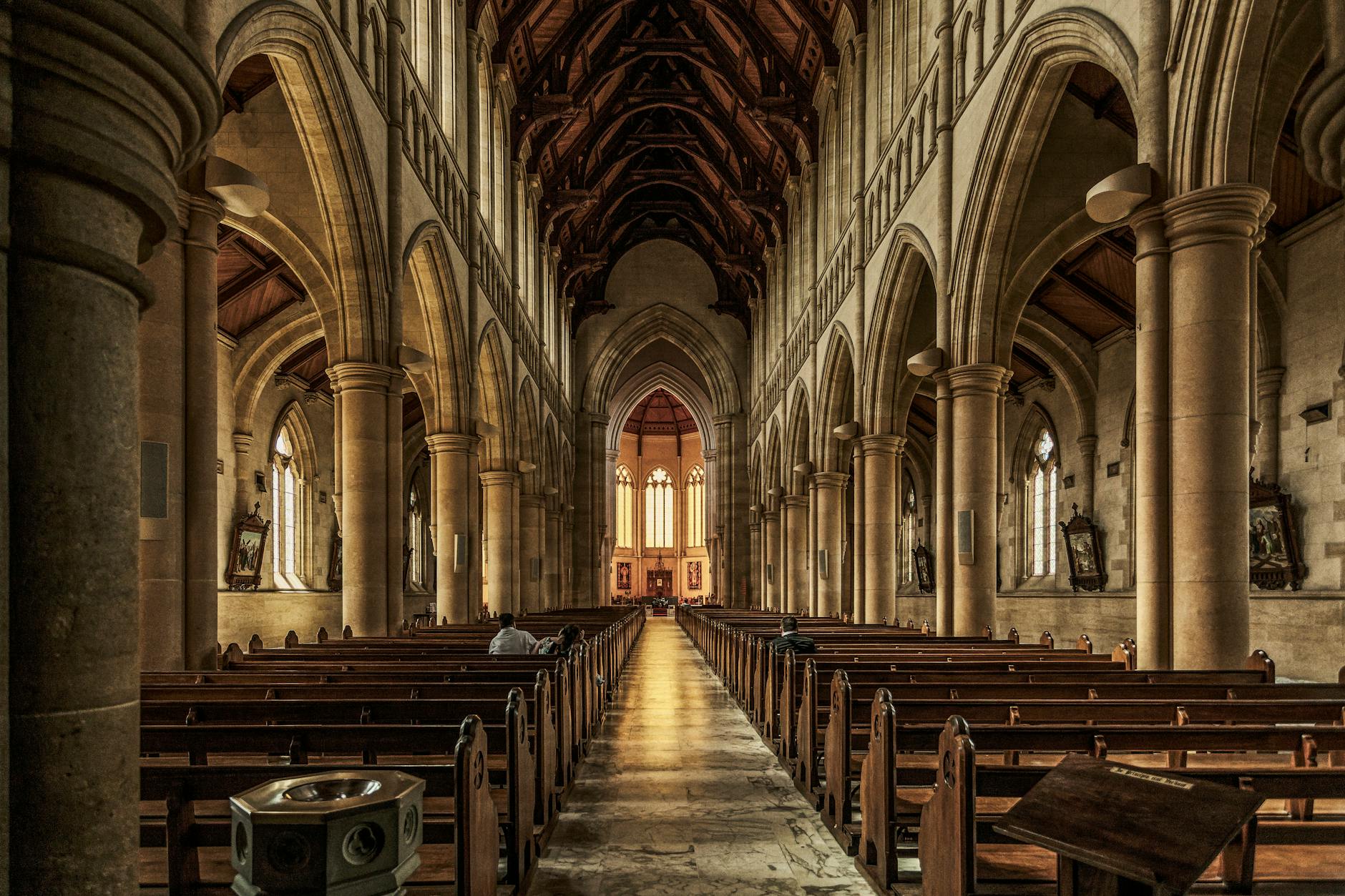
Is The Church Paying Attention to Who Is Sitting in The Pews?

Photo by Robert Stokoe on Pexels.com

We keep hearing about how church attendance is plummeting, leaving everyone wondering what is going to happen to the institutional church.

Many people blame the pandemic and lack of faith. There is critique of the younger generations – how they are lazy or have no need for organized religion.

What if there was more to it than that, though? This is certainly not the first time the church has gotten it wrong and been her own worst enemy.  Yes, it’s true that Gen Zers have less need for a faith community and can be hypercritical of doctrines, but is that really a bad thing? And is this really the reason for a mass exodus from our institutional church?

The problem, it seems to me, is a lack of knowledge of who is sitting in the pews week after week. For decades, I have attended mass and other church services  listening to messages that were out of touch and ignorant to the situations of the congregation. Do pastors know who is financially struggling in their parish? Probably not, because most people having financial troubles are not likely to advertise them to everyone. They feel shame and embarrassment and on top of those negative feelings, hear sermons and lectures about how they should be giving more of their money and time. Imaging how this sounds to the single mom working 2 or 3 jobs to support her family. Does the pastor know her? Reach out to her? Sadly, for people who like to say we follow Christ, the answer is often times, no.

What about the LGBTQ+ members of the church? Does the pastor know them by name? Do they go out of their way to make them feel welcomed, included and affirmed in the faith? What about people with disabilities and mental illness? Is the church reaching out to help those of us who suffer with chronic illnesses? Again, sadly, often times, no.

Of course, there are exceptions to this pattern and I would be remiss in not mentioning that some wonderful people are doing extraordinary things in their faith communities, but in my experience, I have sat in church on several occasions feeling unseen, unheard and sometimes even totally dismissed. For these reasons, I have left the church. I have heard tone deaf sermons and homilies filled with ridicule and guilt trips coming from the pulpit. I have seen pockets being stuffed with money and very little of it goes to programs that benefit marginalized communities in the church. It seems it’s “Not what your church can do for you, but what you can do for your church.” And while it’s important that we give back and participate in our faith communities, the marginalized are certainly not responsible for making the institutional church “survive.” Only when we see that shift, where there is a clear understanding that sitting in the front pews, are the marginalized, the outcasts, the poor, the abused – then, I believe, we may see a shift in attendance and the revival of church community.

This model we have now hasn’t been working for some time if we are honest. We show up to mass or service to be spoken at from the altar, as if we are there to learn a lesson, to pass a cosmic exam. We are spoken to like we are not the heartbroken and the desolate. As if WE are not the poor.

Many years ago, I belonged to a faith community that didn’t show any compassion for my disability or health issues. I was just one of many in the crowd. I saw other people neglected – the lonely, the doubting, the angry. People who wanted to forgive but didn’t know how or what forgiveness really meant. Nobody took the time to explore those feelings with them. It was just preached from the pulpit that forgiveness is what we do, and we should just get about doing it. It was also used as a way for church leadership to manipulate their way out of accountability. “Just forgive and forget,” they would say. Helpful? Not so much.

And then there are the narcissistic pastors, who at their worst, abuse and neglect the community and at their best, use their platform to grift from the church and draw attention to themselves, their cause, and their agendas.

My question to the intuitional church is: Does this sound life-giving? Is this the church Jesus envisions? No, I think we are called to vibrant and diverse communities that get to know each other, help each other. Rejoice with those who rejoice, mourn with those who mourn. – Romans 12:15

The church will not survive shifting blame onto the people it is supposed to be shepherding.

So, I ask this…

Do you, Church, want to know us? Do we want to know each other? Accept each other? If so, I think there is reason to hope in the institutional church.

A prayer for democracy

Yahweh, Protector of those who love democracy,

give us the strength to protect our countries against any negative forces:

who spread racism, populism, radicalism and anti-Semitism,

who rebel against others and make them scapegoats,

who abuse freedom of speech to hurt and lie

and to spread conspiracy theories,

who act out of anger and resentment,

who can only think ‘either/or’ and not ‘and/and’,

who always blame the other and never see their own part.


Yahweh, Protector of those who love democracy,

give us the strength to ever resist such forces,

as we know what it may lead to,

and what we hope never to experience (again).


Yahweh, Protector of those who love democracy,

give us the strength to ensure a nation in which:

each person is free and equal to another,

all kinds of gender have equal rights,

no difference is made between people of different sexual orientation,

everyone has access to good education,

everyone can go to synagogues, churches, mosques and temples without fear,

where children grow up safely,

where the sick and elderly are nursed and cared for,

where minorities are protected,

where everyone’s opinion is valuable to be heard,

and in which nature and culture are protected and cared for.


Yahweh, Protector of those who love democracy,

give us the strength to protect our nation,

as we are grateful to live in a democratic country.


Amen.

—Jom HaShoa